Steel Gates vs Aluminium Gates
Seven key differences that decide which gate wins for your home or business, covering strength, rust, cost, maintenance, lifespan, style and automation.

Choosing a new gate feels simple until you reach the big question: steel or aluminium? Both look the part on day one, yet they behave very differently over the decades that follow. This guide settles the debate across the seven factors that actually matter, so you can invest with confidence.
Steel Gates vs Aluminium Gates: The Quick Verdict
Here is the short answer. Choose steel when strength, security and a traditional look top your list. Choose aluminium when low weight, zero rust and minimal upkeep matter most. The table below breaks down the decision at a glance.
| Factor | Steel (galvanised) | Aluminium |
|---|---|---|
| Strength | Highest | Moderate |
| Weight | Heavy | Light |
| Rust risk | None once galvanised | None (won't rust) |
| Maintenance | Low | Very low |
| Lifespan | Decades; galvanising 40+ years in typical UK air | Decades; corrosion-resistant |
| Security | Excellent | Good |
| Upfront cost | Mid | Higher |
Now let us work through the seven differences in detail, because the detail is where smart buyers save money.
1. Strength and Security
Steel wins decisively on raw strength. Because steel carries far more load per section than aluminium, it resists impact, forced entry and sheer weight without flexing. Consequently, steel remains the first choice for wide driveway gates, heavy security gates and commercial entrances where intruder resistance is non-negotiable.
Aluminium, by contrast, offers solid everyday security while staying impressively light. For most homes, a well-built aluminium gate deters opportunists perfectly well. However, if you want a gate that shrugs off a determined ram or a reversing vehicle, steel still rules.
2. Rust and Weather Resistance
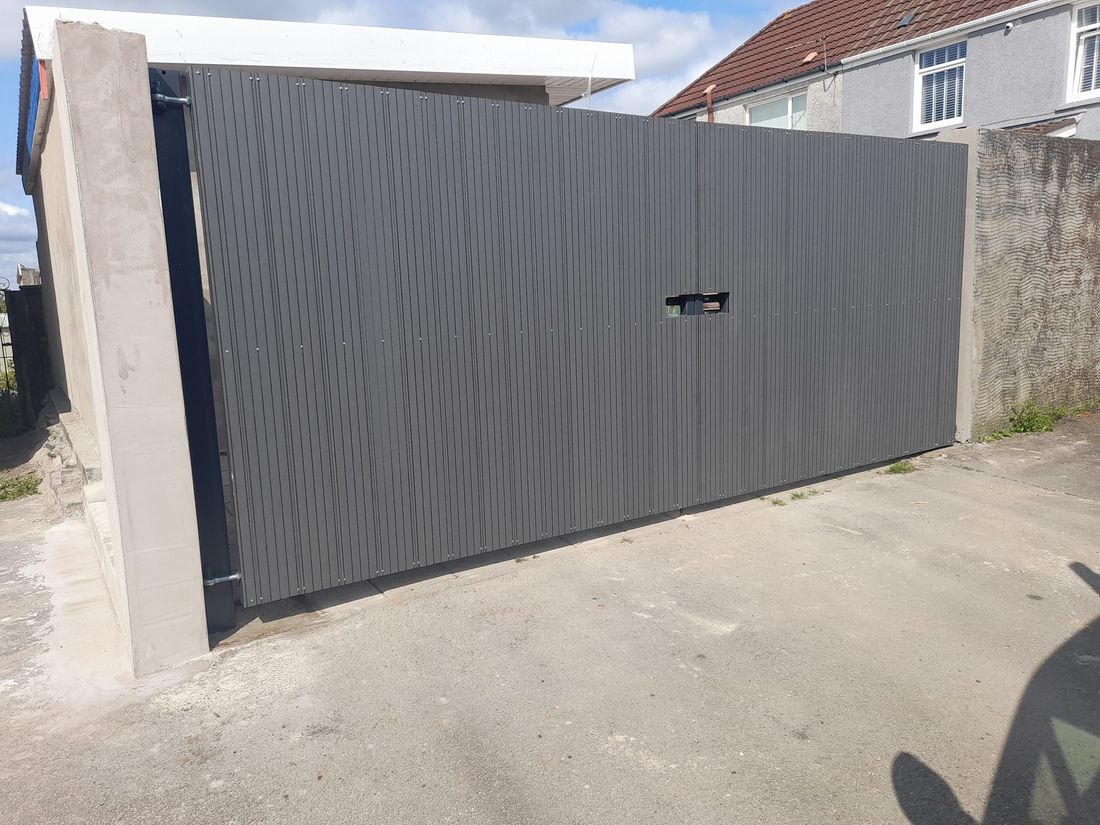
Many buyers assume steel loses here. Bare steel does rust, true. Yet hot-dip galvanised steel tells a completely different story. Galvanising bonds a zinc coating to the steel, which prevents rust far longer than paint alone. Aluminium skips the problem entirely, because it forms a natural protective oxide layer the moment it meets air. Both materials, properly finished, thrive in the damp South Wales climate.
3. Maintenance
Aluminium asks for very little: an occasional wash is usually enough. Galvanised and painted steel needs slightly more attention over the years, mainly checking the finish and dealing with any chips before corrosion starts. Neither is high-maintenance, but if you want to fit and forget, aluminium has the edge.
4. Lifespan
Both last for decades when finished correctly. According to the Galvanizers Association, hot-dip galvanising can protect steel against corrosion for 40 years or more in typical UK atmospheric conditions before any maintenance is needed. Aluminium never rusts at all. In practice, the fabricator and the finish matter as much as the raw metal.
5. Cost: Upfront Price vs Lifetime Value
Aluminium usually costs more upfront, largely because of the raw material and the precision extrusion process. Steel often comes in lower at the point of purchase, especially for bespoke, hand-fabricated designs. Nevertheless, smart buyers weigh lifetime value, not just the sticker price. Galvanised steel delivers decades of service for its mid-range cost, while aluminium repays its premium through near-zero upkeep.
6. Style and Kerb Appeal
Steel suits traditional and heritage looks beautifully. Hand-forged scrollwork, spear tops and period detailing all belong to the steel and wrought iron world. Aluminium, meanwhile, delivers clean, contemporary lines and slim frames that complement modern builds. Your property's architecture should steer this choice as much as the material's properties.
7. Weight and Automation
Weight shapes your automation choice. Because aluminium is lighter, it places less strain on gate motors, which can extend the life of automation hardware. Steel gates automate brilliantly too, yet they demand robust, correctly specified motors to handle the load. A professional survey ensures you match the mechanism to the material every time.

Frequently Asked Questions
Which lasts longer, steel or aluminium gates?
Both last for decades when finished correctly. Galvanised steel resists corrosion for 40+ years in typical UK conditions, while aluminium never rusts at all. Longevity comes down to finish quality and installation, not just the metal.
Are aluminium gates weaker than steel?
Aluminium is less strong than steel, but it is far from weak. For standard residential gates it performs excellently. For maximum security or very wide spans, however, steel remains the stronger choice.
Do steel gates rust?
Untreated steel rusts, but hot-dip galvanised steel does not, because the zinc coating shields it from moisture. That is why we galvanise as standard before painting.
Which is cheaper?
Steel is usually cheaper upfront, especially for bespoke designs. Aluminium costs more initially but demands less maintenance, so the long-term gap narrows considerably.
Which gate is best for automation?
Both automate well. Aluminium's lighter weight is gentler on motors, while steel requires a heavier-duty mechanism. A site survey confirms the right pairing.
The Bottom Line: Which Gate Should You Choose?
Ultimately, there is no universal winner, only the right gate for your property. Choose steel when you prioritise strength, security and timeless character, and choose aluminium when you value lightness, rust-free living and minimal maintenance. Either way, the finish and the fabricator matter as much as the metal itself. Insist on hot-dip galvanising for steel, demand a quality coating on aluminium, and always commission a professional survey before you buy.
If you are weighing up metal gates or aluminium gates in South Wales or the West of England, you can look through examples of our work or ask us to visit and advise.
Not sure which gate is right for you?
We design, fabricate and install both steel and aluminium gates from our Newport workshop, galvanised as standard. Book a free site visit across South Wales and the West of England, and get a fixed-price written quote with no hard sell.
Call 01633 730083 Request a QuoteYou might also need
Metal Gates
Bespoke steel & composite driveway gates
View Metal Gates →Aluminium Gates
Low-maintenance, rust-free, smart access
View Aluminium Gates →Gate Automation
Swing, sliding & bi-folding automation
View Automation →See examples of our work, read our customer reviews, or check the areas we cover across South Wales.